România, India şi China, încotro? 3

Unul din fenomenele ce definesc în prezent sistemul internaţional este ascensiunea economică şi politică a Chinei şi Indiei. Aceste puteri emergente sau rising powers, îşi fac din ce în ce mai des vocea auzită în cadrul sistemului internaţional, cerând un statut egal cu cel al SUA şi al Europei. Pe lângă latura materială a ascendenţei acestor două ţări, care în urma cu 20-30 de ani erau înca considerate ţări aflate în curs de dezvoltare, există şi una ideologică, atât India şi China considerând la nivel cultural că a sosit vremea revanşei în raport cu Occidentul pentru umilinţele suferite în timpul epocii coloniale.

More…

Amnesty laws in Spain and Brazil. Double standards and a judge without friends 2

Brazil and Spain are two countries that share a curiously similar dilemma these days. One may be tempted to think this has to do with their economies in these times of crisis, or maybe with the high visibility of their leaders. Time 100 has just chosen Brazil’s President Lula da Silva as the world’s most influential politician of the year (Obama reached only the fifth place) and he is a truly beloved leader preparing his succession in a booming country on the global scene. Spain is also on the front pages as it represents EU’s rotating Presidency with a very ambitious program. However, their dilemma is not one about the present or the future, but about their past. More…

Polonia după Smolensk 1

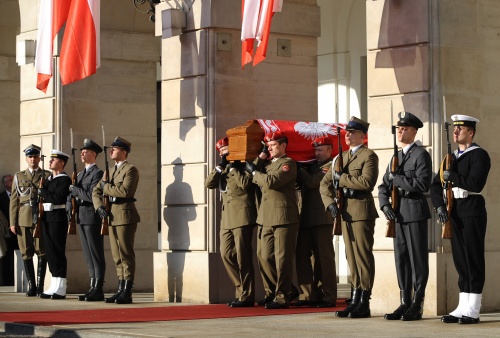
Înmormântarea preşedintelui polonez Lech Kaczynski. Copyright Novinite.com

Catastrofa aeriană în care au pierut 96 de oficiali polonezi va marca politic şi social Polonia în acest an. Tragedia de la Katyn s-a repetat într-o formă minimal simetrică. Polonia s-a aflat în fața unei nevoi de solidaritate şi de aceasta dată nu datorită unei conjucturi istorice, ci a unei catastrofe ivite independent de factori politici. Încercarea la care a fost supusă națiunea poloneză nu poate fi privită și explicată prin prisma unor teorii conspirative. Tragedia poloneză portretizează greutatea unui destin unic. Dar solidaritatea populației şi a politicenilor în fața acestei tragedii nu este de durată. Media poloneză va trece de la unica știre la convulsiile vieții politice și sociale.

More…

Turkey’s democratization dilemmas 3

Turkey is a democracy, but not yet a liberal regime. It is a Muslim democracy but in a secular state built on strong republican principles very much wary of any religious, ethnic or any other “particularistic” identity. However, its ruling party since 2002, the Justice and Development AK party is a moderate Islamist party and promises to further democratize the regime and bring Turkey into the EU and in order to accomplish this, its leaders and supporters seem determined to reform some key principles and institutions of this system. The Kemalist republican model seems to have generated its likely demolisher and the latter has made a long way in a very short time in its transformation of the bureaucracy, the universities and the state institutions. More…

De ce (nu) ar trebui invitată Rusia în NATO! 3

Angela Merkel si Dmitri Medvedev (copyright Sean Gallup/Getty Images Europe)

Săptămâna trecută patru experţi în probleme de securitate şi apărare germani – Volker Rühe (fost ministru al apărării în perioada 1992-1998, membru CDU/CSU), Klaus Naumann (general în rezervă, fost inspector general al Bundeswher şi preşedinte al Comitetului Militar al NATO), Frank Elbe (f0st ambassador) şi Ulrich Weisser (vice-amiral în rezervă şi fost Director al Comitetului Militar de Planificare al Bundeswehr) – au publicat în cotidianul german Der Spiegel o scrisoare deschisă în care propun invitarea Federaţiei Ruse să adere la NATO. Cei patru  îşi fundamentează propunerea pe o serie de argumente: în contextul configurării unui sistem internaţional multipolar şi a ascensiunii puterilor asiatice (India şi China), Rusia este indispensabilă pentru securitatea Europei şi a spaţiului euro-atlantic, atât Rusia cât şi alianţa nord-atlantică se confruntă cu aceleaşi ameninţări, o eventuală aderare la NATO a Rusiei ar conduce la dezvoltarea democraţiei în această ţară prin impunerea respectării valorilor democratice în procesul de aderare, invitarea Rusiei să adere la NATO ar calma temerile privind o posibilă încercuire a acesteia şi îngrădire strategică prin extinderea alianţei către est, iar aderarea Mosocovei la NATO ar conduce la o integrare mai uşoară a Georgiei şi Ucrainei în cadrul organizaţiei. More…

The perils of arming Russia Răspunde

Mistral (L9013) at anchor in Brest harbor courtesy of Wikipedia

The last week’s visit to France of Russian president Dmitry Medvedev  has further strengthen Franco-Russian relations, while at the same time endangering European security. During this visit France and Russia concluded a series of economic agreements concerning the energy market (GDF Suez wil participate  in the Nord Stream pipeline project), a partnership between the French rail company Alstom and its Russian counterpart TMH and opened exclusive talks on buying four Mistral class amphibious assault ships (LHD). Although France has not yet decided to sell the ships, this military deal seems almost certain and the bilateral talks between France’s president Nicolas Sarkozy and his Russian counterpart, Dmitry Medvedev seem to confirm that few details remain to be settled before the green light is given.

More…

Regional integration or regional delusion in Latin America? 5

The Cuban political dissident Orlando Zapata Tamayo died in prison on February 23 after 85 days of hunger strike to protest against severe beatings in jail. Initially sentenced to 3 years imprisonment for contempt, public disorder and „disobedience”, he later was sentenced to 36 years for disobedience in jail. Actually, he was the victim of a very harsh regime of beatings and other privations, a situation very often mentioned in reports of various human rights organizations, Amnesty International being one of them. More…

Ukraine: Political Stability in Question after the Presidential Elections Răspunde

Roman Kupchinsky

Ileana Racheru has interviewed the regretted Ukrainian political analyst Roman Kupchinsky. Roman Kupchinsky was the editor of the Ukrainian language publishing house and research company  Prolog Research Corp. Between 1990 and 2002 he was Director of the Ukrainian service of Radio Free Europe / Radio Liberty and senior analyst for the same institution between 2002 and 2008.  Mr. Kupchinsky died of cancer this year on January 19, aged 66. This interview may be the last he ever gave.

The interview has also been published in Romanian in 22 Magazine and in English on Politică Externă blog.

How do you describe the Ukrainian electorate and the electoral programs of the main candidates? What groups of interest are behind each important candidate?

More…

Romania will host elements of the US missile shield 3

Courtesy of Ria Novosti

Romania’s President, Traian Băsescu has announced yesterday the willingness of his country to host parts of US the ballistic missile defense system on its territory. The decision to allow the United States to deploy anti-ballistic missiles in Romania was taken in a meeting of the Supreme Defense Council (CSAT). According to Traian Băsescu Mrs. Ellen Tauscher the Under Secretary of State for Arms Control and International Security has formally proposed on behalf of the United States of America that Romania should host on its territory an anti-ballistic missile system. The US State Department has confirmed the agreement while the US embassy in Bucharest has saluted president Băsescu’s decision. Following the CSAT decision bilateral negotiations will be started, however the final approval for the deployment of the missiles must come from the Romanian parliament. The Romanian president has stated that the missile shield is not directed against Russia, but is designed to protect against other threats.

More…

Kazakhstan’s big plans for OSCE. Let’s hope not 4

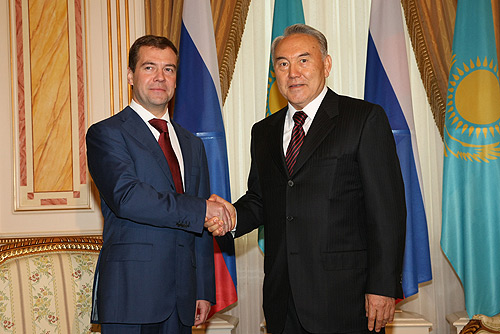
Dmitry Medvedev and Nursultan Nazarbayev in Astana, 2008 (courtesy of Wikipedia)

Kazakhstan promises to reform OSCE. Europe still hopes to democratize the entrenched authoritarian Kazakhstan. Who is under the bigger illusion?

Yesterday, Kazakhstan took up the chairmanship of the OSCE for the 2010-2011 mandate. The US manifested all its support to the new OSCE leaders and “stands ready to encourage your efforts to lead by example and reflect in practice the principles and provisions of the organization you now chair.” The Finnish foreign minister, whose country occupied this seat in 2008, explicitly stated his faith in the good intentions of the new team chairing the OSCE and even mentioned a possible reform of the organization concerning the European security. He believes in the Kazakhstan’s projects for the OSCE despite the fact that “none of the Central Asian countries are, I guess, perfect from a Western, democratic, rule-of-law perspective.” He also believes in the diplomatic ability of Kazakh leaders in bringing at the same table all OSCE members in order to reform the European security framework with the help of a recent plan endorsed by the Russian president Medvedev.

More…

The End Game: the consequences of World War II 7

Potsdam Conference (courtesy of Wikipedia and Bundesarchiv)

It is said that when asked about what he thought of the French Revolution, the Chinese foreign minister Zhu Enlai replied that it is too early to say. This famous quip about the French Revolution can be applied also to the consequences of World War II. This article is the final installment in a series of articles which dealt with the greatest conflict ever to have been fought and provides a short-list of the far reaching consequences of this event. The list of consequences should not be viewed by the readers as being definitive and I strongly urge them to add more or comment on them.

More…

Learning how to coup with democracy 1

How democracies perish is a very old question and the various answers given by political science are still disputed. How young and unconsolidated/aspirant democracies perish is an easier question, given the fact that some concrete lessons are offered generously these days, and their charm seems irresistible for would-be autocrats. More…